

A gothic psychological thriller
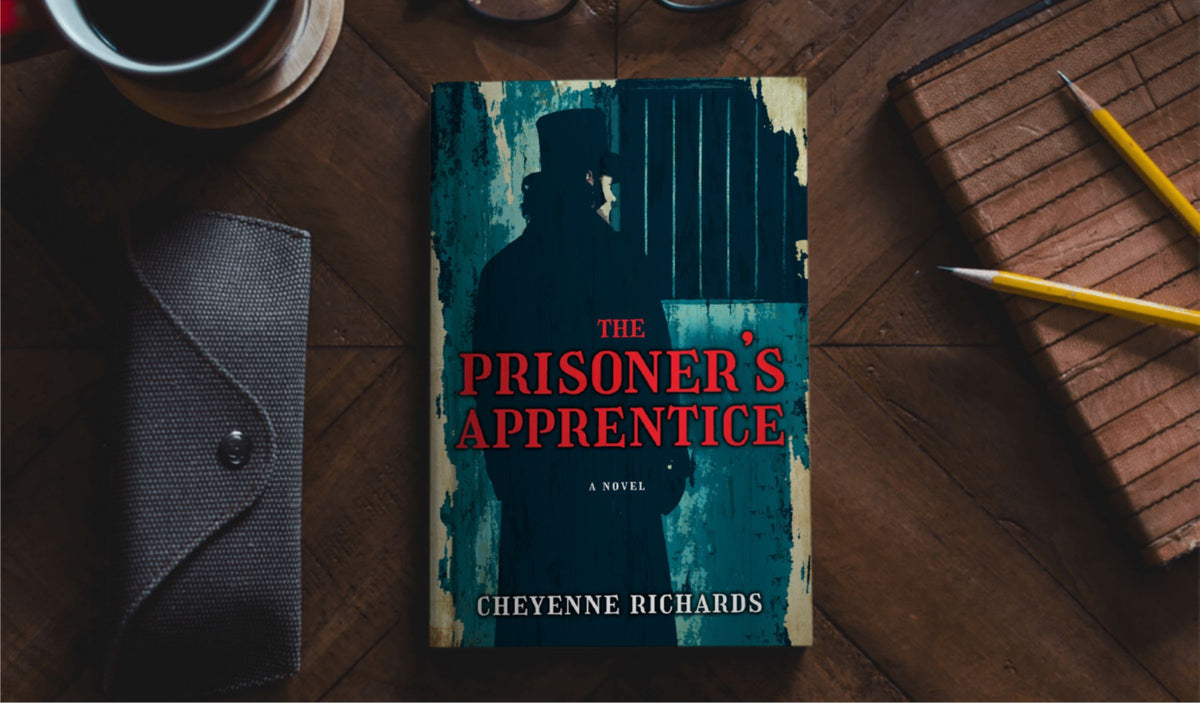
The Prisoner’s Apprentice
A novel by Cheyenne Richards
IRDA award-winning book, Eric Hoffer Award finalist, awarded BRAG medallion
Clever boy. Genius killer. True story.
In his father’s jail, young Albert finds what he’s always wanted: a teacher who understands him. But some lessons exact a terrible price.
When brilliant murderer Edward Rulloff is imprisoned in Ithaca, he offers Albert an education most boys in 1846 could only dream of—languages, philosophy, and the chance to become extraordinary. Under Rulloff’s patient tutelage, Albert transforms from a lonely child into a gifted scholar. Yet as their unique friendship deepens, Albert begins to suspect that his mentor’s acts of kindness mask a growing darkness. Each new lesson draws them closer to a terrible choice between loyalty and justice.
Based on a shocking true story that captivated nineteenth-century America, The Prisoner’s Apprentice delivers a haunting exploration of what drives men to greatness—and to darkness. In the tradition of The Alienist and Devil in the White City, this atmospheric historical thriller weaves true crime and psychological suspense into a gothic tale that blurs the lines between genius and madness.
“The Prisoner’s Apprentice grabbed me on page one and swept me up into a rich tapestried world of mystery and intrigue that kept me turning page after page well into the night.” —Lolly Winston, NYT bestselling author
- Standalonenovel
- 288pages
- August 2021published
 Winner
IndieReader Discovery Award · Historical Fiction 2022
 Finalist
Eric Hoffer Award · Historical Fiction 2022
 Awarded
B.R.A.G. Medallion
★★★★★“Grabbed me on page one”
Buying direct
How it arrives
Ebook$4.99
Download immediately to your Kindle or favorite reading device via BookFunnel.
Paperback$14.99
Printed and shipped to order. Please allow a couple weeks for delivery.
Audiobook$9.99
Download immediately to the free BookFunnel Audiobook app.
Sample
Read a little. Hear a little.
That sweltering June began like any other. A few fighters and a buggy thief flowed through our jail. A man from the plaster company married a girl from Dryden. Eph Schutt lost his wife and baby to childbed fever. Mostly I remember the endless funeral sermon and Eph’s sister giving me a hard smack on the shoulder for kicking at the pews.
By the Fourth of July, everyone with a boat was out on Cayuga Lake, dragging chains and hooks and fishing nets, looking for bodies.
Each had a theory about where Rulloff might have dumped the remains of his missing wife and child—poor Eph’s sister and niece—but their chaotic searches led nowhere. The Independence Day parade that year looked more like a funeral march, with both the Friends of the Ithaca Railroad and the Anti-Slavery Society cancelling their lectures out of respect for unprecedented circumstances.
Keep readingClose the sample
I was only six then, but as far as I can decipher, Edward Rulloff had once held a reasonable reputation in Ithaca, though always that of an outsider. I must have heard his name in passing, but had never met the man. He’d been a teacher for a while, but school cost a fortune in those days, even if Pa had believed in scholarship, which he most fervently did not. Later, Rulloff practiced herbal medicine, but again, paying for a doctor was not in Pa’s perspective of how the world should run.
With my help, Rulloff would soon build a far more impressive résumé: doctor, lawyer, professor, inventor, philologist fluent in twenty-seven languages, serial killer.
As the summer dragged on, voices grew more hushed. Mothers held their children closer in the folds of their skirts, and vague dread pulled at the whole town like an undertow.
Each time a rope went down, I wondered if they would pull a waterlogged baby from under the glassy surface. I was still a novice to death then, but learning fast. The boy down the street told me dead people’s eyelids fall open forever, that’s how you know they’re dead. I wondered if somewhere in the lake the lady and her baby stared at each other with wide eyes, never blinking. I tried to imagine it by leaving my eyes open but couldn’t do it. The air was too dry, the sun too bright.
In those days, Pa and I headed to Grant’s every night for supper. The sign said “Grant’s Coffee Shop” to appease the pastor, but they only served whiskey and women. And while that time is fuzzy in my memory compared to what happened later, I knew there were three things I could always count on when we walked through that sloped doorway.
First, someone would have saved Pa’s table, the best one in the place—closest to the south window. In the summer, the breeze carried the cool freshness of the lake in through that opening. The table was easy to spot—blackened on one leg from being used as a fireplace poker. There weren’t enough chairs, so I was always relegated to the warped floorboards and took care to position myself as far as I could from both the spittoon and the older boys who stole my bread and marmalade.
Second, the men would talk longer than I could stay awake. Pa was officially Ithaca’s jail-keep, but unofficially more like the mayor of our little village, leading talk on whether the Peterson land was too shaded for apples and who’d been lost over the winter to the blizzard, the pox, or buggy accidents. Gradually, travelers would pull one chair after another in his direction until Pa sat in the center of a big circle, each stranger in turn buying a half-pint to pass around. A patent medicine man would tell of a brush with bandits on the road, a boat hand of an explosion that lit up the whole Hudson, a circuit lawyer of Indian attacks in the territories. Or else there’d be a trapper with stories of giant bears chasing him through the woods. Or a logger who showed off his scars. And as the oil lamp’s shadows danced over the bare plank walls, I learned by installments that my home town was meager and insignificant, and that the world outside was impossibly vast and full of adventure.
And third, after several rounds, someone would nudge me awake to remind me that before I was born, my fearless father had rushed into a blazing house and saved a whole family from a fire all by himself—the parents, five kids, and someone’s cousin. Then every soul in Grant’s would toast Pa, down the rest of the whiskey and sing “There Is No Home Like Mine Own” good and loud and stumbly. I’d once asked Pa how I could become brave like him. “It’s in your blood, Albert. Your grandpa died fighting the Creeks. His pa marched with Sullivan. You’ll grow out of this namby-pamby phase and become a man worth his salt. I’ll make sure of it.”
I wanted to believe him, but I could never shake a nagging certainty that instead of a hero like Pa, I was destined to become the family coward. For all Pa’s encouragement to face down the bullies, I only learned how to run. And the day Pa tried to teach me to swim, he tossed me in the lake and I choked and coughed and windmilled my arms till he had to plunge in with his boots on and pull me out himself. After, I clung to Aunt Babe’s leg.
“You can’t terrify a child like that,” she snapped.
“How the hell you think I ever learned?” Pa’d yelled right back.
All this, of course, was before the nightmares about dead babies began.
Eph, still in mourning clothes for his wife and baby, had trudged into the jail and told Pa he was worried because now his sister and niece were missing. Mostly I remember feeling secretly avenged, thinking about that smack she’d given me, until the catch in his voice drenched me in shame. He was a big man, but his back trembled as he told Pa there was no sign of Harriet, baby Priscilla, or Doc Rulloff. At the house, Eph said, he’d found dishes caked in food and laundry strewn across the floor.
Pa’d told Eph not to worry, Rulloff had probably taken them for an afternoon row on the lake. Surely, they’d be back by nightfall.
“Awful things grief can do to the mind,” he said to me later. “No one needs tell me. Terrible thing to lose a wife in childbirth.”
Three weeks later, Eph’s sister and niece were still missing. Pa had to call the sheriff in from Elmira, and that’s when things started to happen quickly. They discovered Rulloff had fled and tracked his movements as far as Syracuse by stage, but lost his trail at the canal. The sheriff brought in hounds to scour the acres around Rulloff’s house, but found no sign of hastily dug graves.
I heard speculations around the water pump, not meant for my ears but not whispered either. The brewer’s wife told the Clinton House cook that they’d found disemboweled animals in Rulloff’s cellar. The tanner said bodies don’t stay underwater forever. Eventually, they rot and pop to the surface. He knew because he’d lived in New York City once, and bodies were always floating on the East River there.
For all the lake dragging, no one could find the bodies of Eph’s sister or niece, but someone recalled that Eph’s wife and daughter had been doctored by Rulloff just before they died. Suddenly, the question swept through Ithaca like a chill wind—had they actually been taken by fever, or had Rulloff killed all four of Eph’s kin?
A week later, a different doc from Dryden was brought in to exhume the remains of Eph’s wife and baby—the only two bodies they did have. With all the newfound bloodlust, I remember feeling disappointed that he couldn’t say for sure whether they’d been killed on purpose, only that he found copper in their bellies. Copper wasn’t part of any cure he knew of, but he only knew medicine from Gunn’s book. As a test, he tried feeding copper to a rabbit. The rabbit died.
That was good enough for the locals, and soon every conversation—at the Saturday market, in the lanes, at church—became an urgent cry to find and hang the dreadful monster who’d committed such abominable acts against innocent women and children. In my imagination, Rulloff grew into a half-man, half-growling beast, covered in blood, with stooped shoulders and wolflike hair.
Every night I endured nightmares of meeting Rulloff alone in the woods, but in the real world, there was no word of him for weeks. The jail sat empty, so Pa kept me busy planting carrots, digging turnips, and piling wood for the kitchen fire. Meanwhile, Pa got new shoes for the horses and greased the coach axles and cleaned his gun, but although he sent urgent telegrams to all corners of the state, the replies came back with no new information.
Until one oppressively hot afternoon in early August.
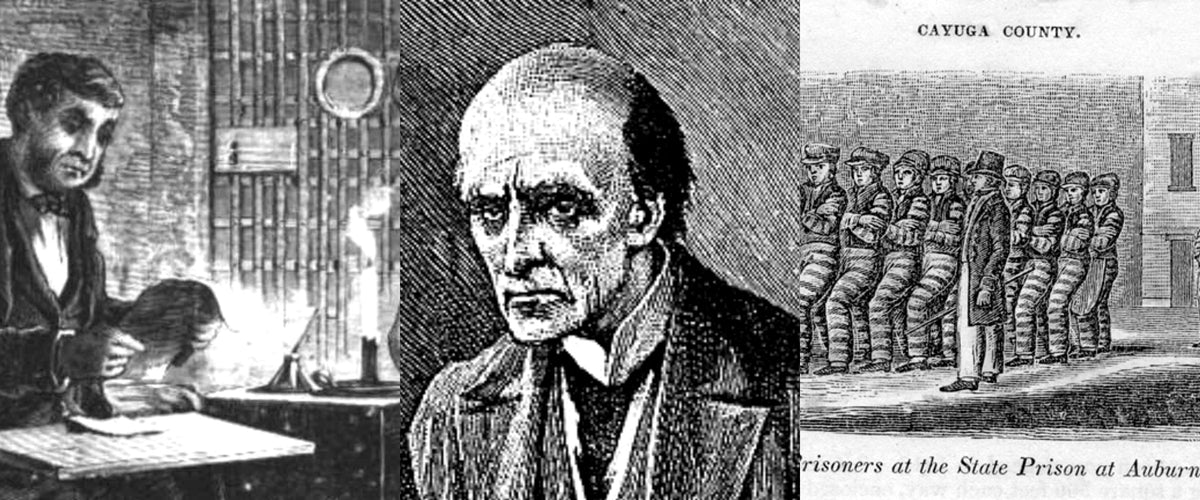
The true story
His crimes drew editorials from Mark Twain.
27languages he spoke
Edward Rulloff spoke 27 languages, may have inspired Sherlock Holmes’ nemesis Professor Moriarty, and murdered at least three people. His brain, one of the largest ever recorded, is still on display at Cornell University.
What readers say
“Part thriller, part psychological study—and completely riveting storytelling.”
“Part Night of the Hunter and part Silence of the Lambs”
“I finished it in 24 hours!”

About the author
Cheyenne Richards
Cheyenne Richards is an award-winning historical fiction author who writes sweeping novels about the women who claimed the sea—drawn from true stories, deep waters, and the lives history nearly forgot. She lives and writes aboard her sailboat Pristine, currently working her way around the world.
From truth comes fiction